Design/Non-Design
In the second semester of 2023–2024, Gemma Copeland and I were invited to co-develop and co-teach Design/Non-Design at DELLI, the BA+MA Design Program at Lusófona University in Lisbon. This class ran once as each year Lusófona invites different guests to develop a new syllabus around the idea of blurring the boundaries between what is design pedagogy and what isn't.
We used the workers' inquiry as a frame: a methodology that combines research with organising to produce knowledge about working conditions from the perspective of the workers themselves. The topics explored in this class affected directly the students, about to begin mandatory internships right before entering the job market in Portugal, a context with highly exploitative labour conditions.
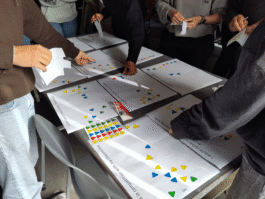
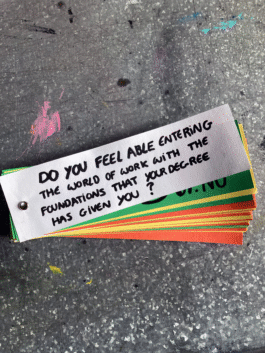
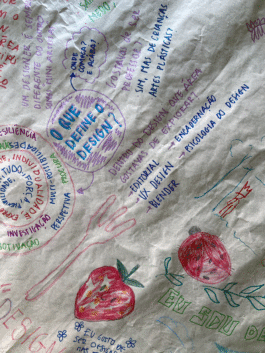
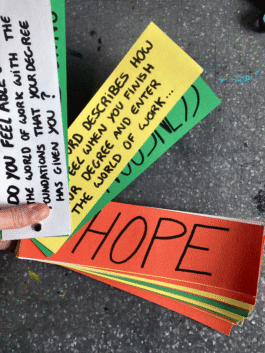
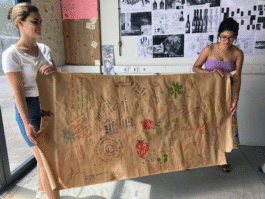
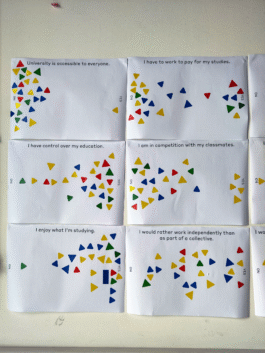
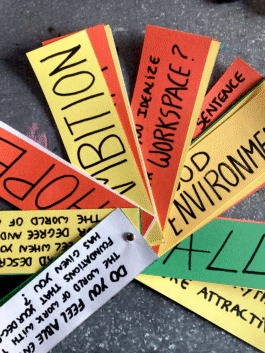
The first half of the semester introduced and practised creative research methods: map-making, diary keeping, interviewing, close reading, surveys. Alongside these, we discussed what the design industry actually looks like from the inside (precarity, the gender, race and class pay gap, unpaid and underpaid work, self-exploitation). Two guest workshops extended the inquiry: Elvia Vasconcelos on collaborative visual research, and Afonso Matos on consciousness-raising, drawing on his book Who Can Afford to be Critical? The syllabus drew on Precarious Workers Brigade's Training for Exploitation handbook, the Transform Your Work toolkit by Common Knowledge and Autonomy Institute, and research and projects by Design Interns Club, United Voices of the World, Brave New Alps, and Evening Class.
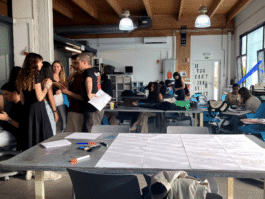
Students' early guardedness gave way to lively class discussions once the topics started touching something real: their own internships, their own conditions, the gap between what design school promises and what the profession delivers. The second half of the semester gave groups space to respond to what they'd found.
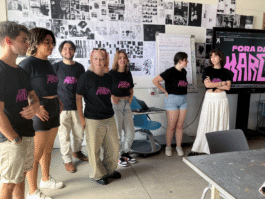
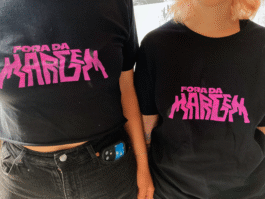
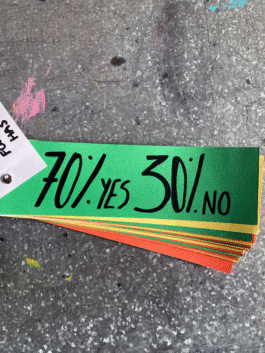
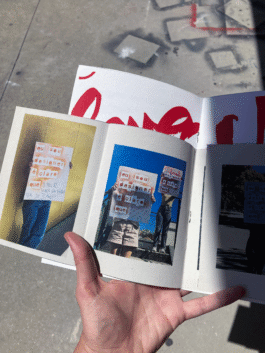
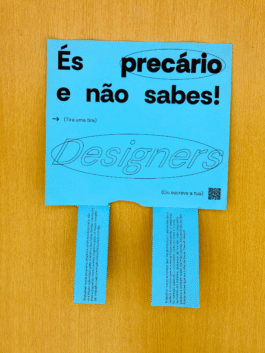
What came out of it: Fora da Margem, a podcast exploring labour conditions in design, built out fully (visual identity, website, episodes, Instagram, t-shirts, stickers). Designer's Unplugged's PicNic series, a monthly event bringing students and professionals together to talk about what it actually means to work in design. A student newspaper focused on work and study conditions, made for and by their peers. And quieter things: conversations about how to balance life and study time, proposals for platforms to collect and share context-specific information about labour practices in Portuguese design.

Design/Non-Design
In the second semester of 2023–2024, Gemma Copeland and I were invited to co-develop and co-teach Design/Non-Design at DELLI, the BA+MA Design Program at Lusófona University in Lisbon. This class ran once as each year Lusófona invites different guests to develop a new syllabus around the idea of blurring the boundaries between what is design pedagogy and what isn't.
We used the workers' inquiry as a frame: a methodology that combines research with organising to produce knowledge about working conditions from the perspective of the workers themselves. The topics explored in this class affected directly the students, about to begin mandatory internships right before entering the job market in Portugal, a context with highly exploitative labour conditions.
The first half of the semester introduced and practised creative research methods: map-making, diary keeping, interviewing, close reading, surveys. Alongside these, we discussed what the design industry actually looks like from the inside (precarity, the gender, race and class pay gap, unpaid and underpaid work, self-exploitation). Two guest workshops extended the inquiry: Elvia Vasconcelos on collaborative visual research, and Afonso Matos on consciousness-raising, drawing on his book Who Can Afford to be Critical? The syllabus drew on Precarious Workers Brigade's Training for Exploitation handbook, the Transform Your Work toolkit by Common Knowledge and Autonomy Institute, and research and projects by Design Interns Club, United Voices of the World, Brave New Alps, and Evening Class.
Students' early guardedness gave way to lively class discussions once the topics started touching something real: their own internships, their own conditions, the gap between what design school promises and what the profession delivers. The second half of the semester gave groups space to respond to what they'd found.
What came out of it: Fora da Margem, a podcast exploring labour conditions in design, built out fully (visual identity, website, episodes, Instagram, t-shirts, stickers). Designer's Unplugged's PicNic series, a monthly event bringing students and professionals together to talk about what it actually means to work in design. A student newspaper focused on work and study conditions, made for and by their peers. And quieter things: conversations about how to balance life and study time, proposals for platforms to collect and share context-specific information about labour practices in Portuguese design.
Previous project
Next project
Eva Gonçalves
Rua do Mato Grosso 11a
1170-234 Lisboa
Portugal
Lausitzer Str. 11
10999 Berlin
Germany
For project enquiries,
commissions or collaborations,
please get in touch:
studio@evagoncalves.com
+49 (0) 176 568 081 61
Instagram ↗
LinkedIn ↗
Behance ↗
© Eva Gonçalves 2026
Eva Gonçalves
Rua do Mato Grosso 11a
1170-234 Lisboa
Portugal
Lausitzer Str. 11
10999 Berlin
Germany
For project enquiries,
commissions or collaborations,
please get in touch:
studio@evagoncalves.com
+49 (0) 176 568 081 61
© Eva Gonçalves Studio 2026